
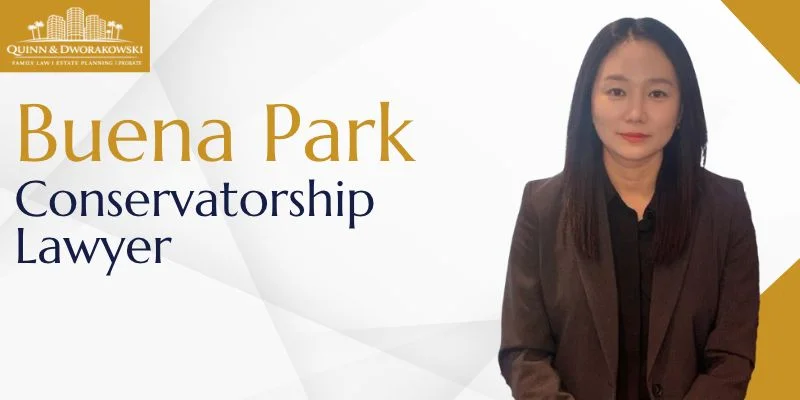
Buena Park Conservatorship Lawyer

Dedicated Buena Park Conservatorship Lawyer Help for Families Facing Tough Decisions
A conservatorship lets a court appoint someone to manage daily care or finances for an adult who can no longer safely handle those tasks alone. The cause may be advanced dementia, a traumatic brain injury, or a lifelong developmental disability.
California law does not let a judge grant a conservatorship just because a family member believes it would help. The court has to find first that less restrictive options, such as a power of attorney or a supported decision-making agreement, will not work.
We know how hard it is to watch someone you love lose the ability to manage their own life. A Buena Park conservatorship lawyer at Quinn & Dworakowski, LLP can help you put together a petition that meets the court’s standard and protects your loved one.
Our work has been recognized by Best Lawyers. Quinn & Dworakowski LLP, was named one of the Best Law Firms in the United States and one of the Best Law Firms, Family Law Tier 1 in Orange County. We’ve also won other awards. All of these honors and awards only matter because of the work we do for our clients.
Contact us to talk through what your family is facing and what the conservatorship process actually involves.
Conservatorship Matters We Handle for Buena Park Families
Families come to us at different points in the process, and the right path depends on what your relative actually needs help with. The case types we handle include:
- General conservatorship of the person, the estate, or both, for an adult who cannot manage daily needs or finances
- Limited conservatorship for an adult with a developmental disability who still needs some ongoing support
- Temporary conservatorship when a relative’s health or finances face immediate risk before a full hearing can be scheduled
- Contested conservatorship cases where family members disagree about who should serve, or whether a conservatorship is needed at all
- Conservatorship accountings and the periodic reports the court requires after appointment
- Petitions to modify or end a conservatorship once it is no longer necessary
Every one of these moves through the same Orange County probate court, but the paperwork and the proof required shift depending on which type applies to your relative. An experienced Buena Park estate planning lawyer can help guide you through the process.
What’s at Risk Without the Right Conservatorship in Place
Without a conservatorship, family members often have no clear authority to manage bank accounts, sell property, or decide where the person lives. That is true even for a spouse or an adult child.
Banks can freeze access to accounts the person can no longer manage. A gap in authority like this is sometimes where financial exploitation by a stranger or an unreliable caregiver starts, which is part of why California courts take the process seriously.
Under Cal. Prob. Code § 1800, conservatorship law exists to protect the rights of the person involved. It also aims to make sure their basic needs for health, food, and shelter are met. Before granting one, the court must also find under Cal. Prob. Code § 1800.3 that a conservatorship is the least restrictive option available. That means the petition has to explain why less intrusive tools will not work for your relative.
How Our Buena Park Conservatorship Lawyers Prepare a Petition
Conservatorship cases for Buena Park residents are not heard in a local city courthouse. Every conservatorship petition in Orange County goes through the Probate and Mental Health Division of the Orange County Superior Court. That means your case moves through the same probate judges and court investigators no matter which city your relative lives in.
Preparing a petition generally means pulling together the capacity declaration (a medical professional’s statement about your relative’s abilities), the required notices to relatives, and the supporting evidence a judge expects to see before setting a hearing date. A case can take on additional steps if a relative contests the petition or the court orders a further investigation.
At Quinn & Dworakowski LLP, our practice covers estate planning and probate matters alongside family law. We can advise you on all of your options to protect your loved one.
FAQs About Buena Park, CA Conservatorship Laws
How long does a conservatorship case usually take in California?
Many cases take a few months from filing to a final hearing. However, timing varies depending on the court’s schedule and whether anyone contests the petition. The court has to complete an investigation, confirm proper notice went to relatives, and review the capacity declaration before deciding whether to grant the conservatorship.
What does a conservatorship cost?
Costs depend on court filing fees, any required investigator fees, whether a relative contests the petition, and attorney’s fees. A contested case, which requires more hearings and more evidence, generally costs more than an unopposed one.
What happens if a conservatorship is contested?
Either the person who may need a conservator or another relative can object to the petition, and the matter then goes to a contested hearing. The person who might need a conservator has the right to an attorney, and the court can appoint one if they don’t have their own. A court investigator also reviews the situation and reports to the judge. Each side presents evidence, and the judge decides whether a conservatorship is needed and who should serve. Contested cases often involve extra hearings, so they usually take longer and cost more than unopposed ones.
Can a conservatorship be avoided?
Sometimes. If your relative already has a valid power of attorney, an advance health care directive, or a supported decision-making agreement that still works for their situation, the court may find a conservatorship is not the least restrictive option and deny the petition.
Speak With a Buena Park Conservatorship Lawyer About Next Steps
Deciding whether a conservatorship is the right step for someone you love is rarely simple. The paperwork alone can feel like a second job on top of caring for your relative.
A Buena Park conservatorship lawyer at Quinn & Dworakowski, LLP can walk you through whether a general conservatorship, a limited conservatorship, or another arrangement fits what your family actually needs. Contact us today to schedule a consultation and talk through the options available to your relative.

Copyright © 2026 Quinn & Dworakowski, LLP. All rights reserved.
Digital Marketing By: 
*Images are obtained under license from Canva and other third-party stock image providers, with attribution included where required.